As digital technologies reshape education, PLDT and Smart are strengthening efforts to ensure that no learner is left behind, especially in geographically isolated and underserved communities.
These efforts were recently highlighted during the University of Santo Tomas TigerTech Conference 2026, where PLDT Innolab head Kristine Dara Ever Juan shared how emerging connectivity solutions and adaptive learning models can help close longstanding education gaps in the Philippines.
At the core of this push is expanding next-generation connectivity and pairing it with inclusive, high-impact learning programs designed for real-world conditions.
Urban centers benefit from stronger communication infrastructure. Networks today can already support data-heavy applications—from immersive learning platforms to augmented and virtual reality tools—with increasing reliability. Outside urban centers, however, conditions can change quickly.
“The real story is in geographically isolated and disadvantaged areas,” said Kristine Dara Ever Juan, head of PLDT Innolab. “That’s where access is still limited—and where innovation matters most.”
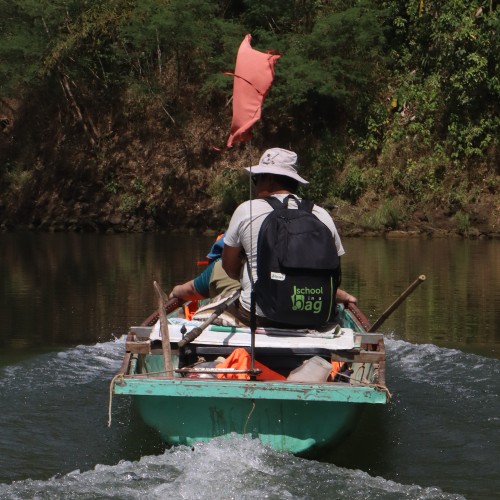
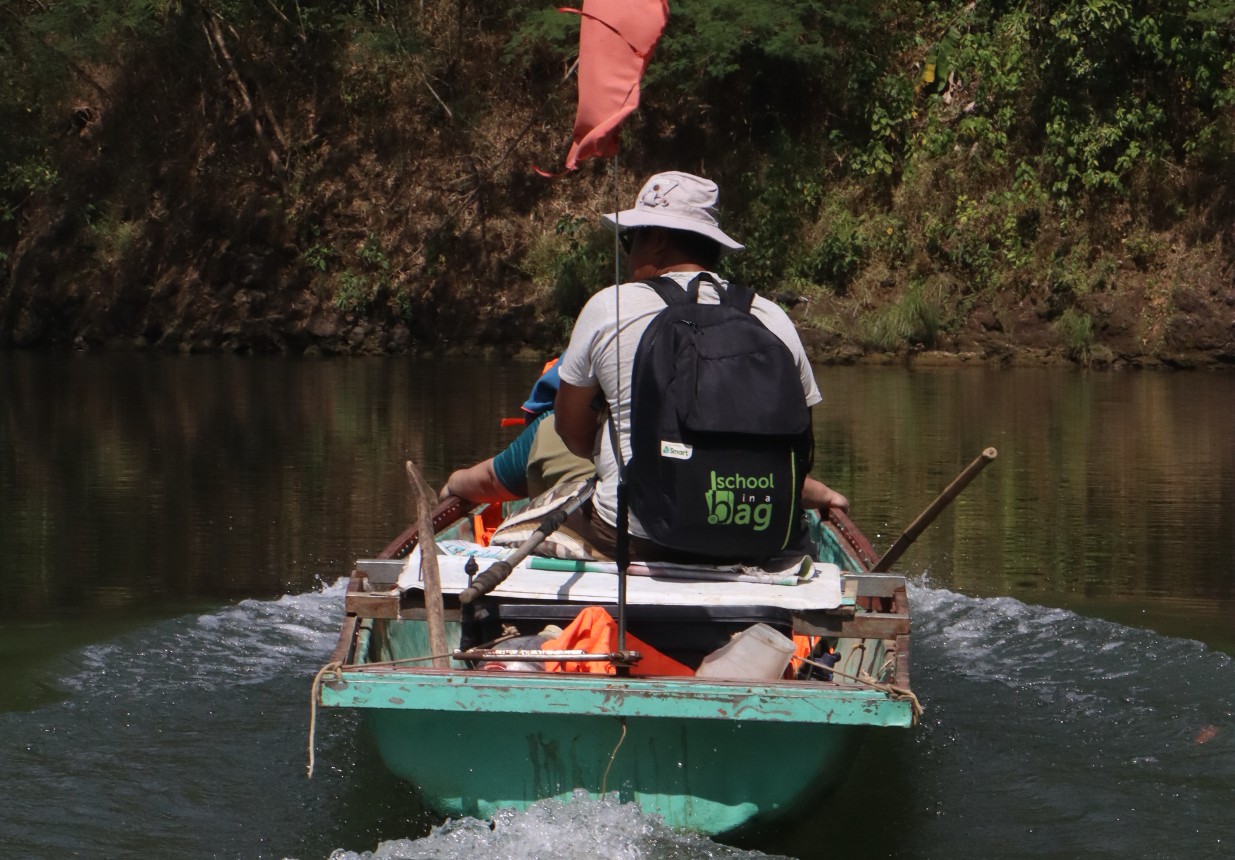
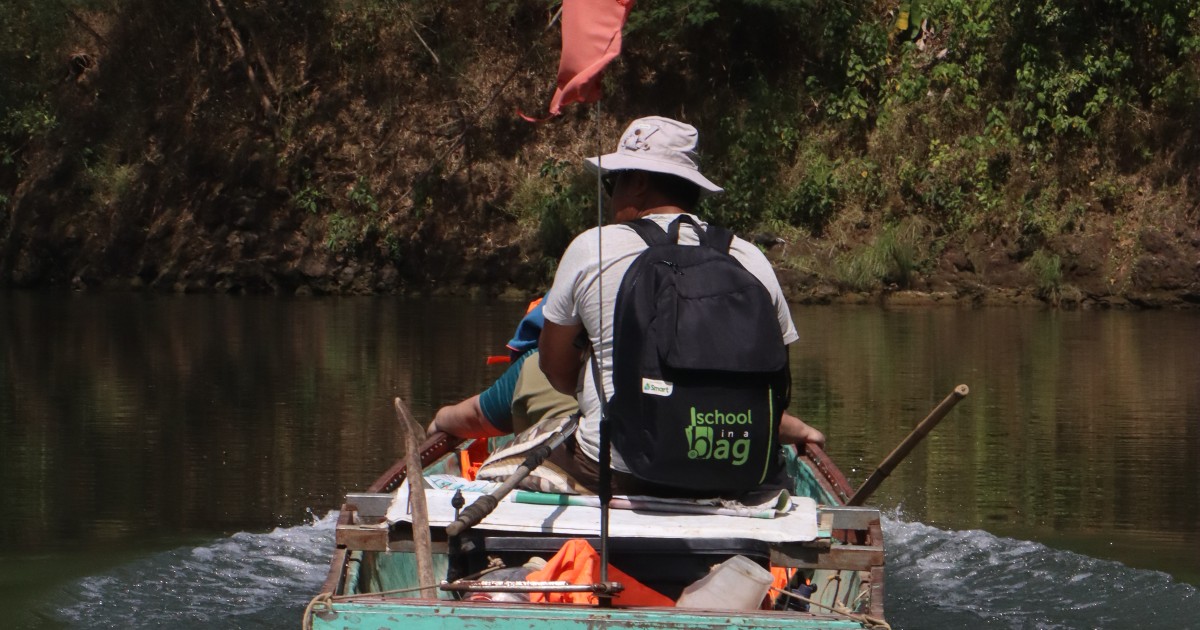
PLDT and Smart's School-in-a-Bag program brings the classroom to remote communities.
PLDT and Smart are now testing a mix of non-traditional technologies to extend connectivity to these areas, including approaches that reduce reliance on conventional telco infrastructure.
One of these uses light instead of fiber. Through a partnership with Google Taara, the companies are deploying ‘Air Laser’ links that transmit data across islands and mountainous terrain, effectively replicating fiber-like speeds minus the cables. Another initiative, in collaboration with Lynk Global, introduces Direct-to-Device (D2D) satellite connectivity, allowing standard mobile phones to connect directly to satellites—an approach aimed at extending basic access to remote communities.
The idea is simple. Where terrain makes traditional infrastructure difficult, rethink how connectivity is delivered. But connectivity alone is not the end goal.
PLDT and Smart are pairing these network innovations with versatile learning tools designed for rapid deployment. Under the #KonektedForLearning initiative, the School-in-a-Bag (SIAB) packages make their way to some of the country’s hard-to-reach areas. Each SIAB acts as a mobile classroom that includes a laptop for teachers, tablets preloaded with learning materials for students, and a pocket WiFi device. To date, the program has reached around 670 schools nationwide, benefiting more than 117,000 students.
The more complex challenge is whether these initiatives translate into sustained learning outcomes. That is where a crisis-resilient pedagogy comes in.
.jpg)
PLDT, Smart-backed CVIF Dynamic Learning Program helps develop independent learners.
Each SIAB deployment includes onboarding to the Central Visayan Institute Foundation Dynamic Learning Program (CVIF-DLP), a teaching framework embraced by the Department of Education to maintain learning in times of disruption. Designed for resource-constrained environments, CVIF-DLP accounts for conditions such as teacher and classroom shortages, extreme weather, calamities, and conflict. The pandemic-tested teaching strategy emphasizes independent learning where complex concepts are broken down into simple lessons that students can accomplish with minimal or no direct teacher supervision.
PLDT and Smart’s education programs build on existing tools and infrastructure by extending connectivity to isolated areas through unconventional communication solutions, integrating flexible teaching approaches suited to real-world conditions, and working with a broader innovation ecosystem to scale these efforts.
Beyond infrastructure and learning tools, PLDT Innolab continues to deepen its support for universities and young innovators by opening access to its broader innovation ecosystem. Through knowledge-sharing sessions, immersive programs, and guided tours, Innolab provides students and early-stage builders with practical exposure to emerging technologies and real-world problem solving. By connecting them with startups, partners, and industry leaders, Innolab enables young innovators not only to learn, but to actively contribute to co-creating solutions that respond to real challenges on the ground.
“For technology to meaningfully improve Philippine education, it has to be designed around our realities—not just our aspirations,” Ever Juan said. “When innovation is paired with inclusion, learning environments can be created where geography is no longer a defining barrier to opportunity.”
These efforts underscore the PLDT Group’s efforts in helping the country achieve UNSDG 4 on Quality Education and UNSDG 9 on Industry, Innovation and Infrastructure.