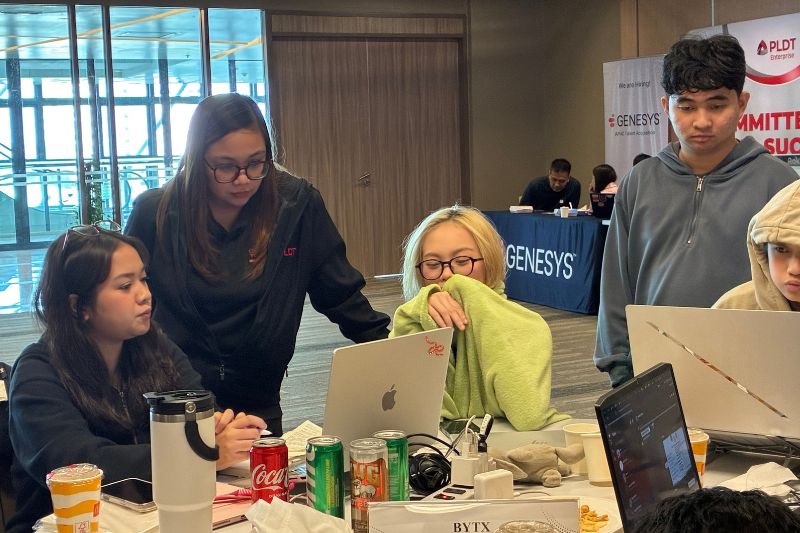
What can young Filipino innovators accomplish with artificial intelligence (AI) in just 30 hours? For the students who participated in AI in 30 Hours, the challenge was an opportunity to put their ideas, creativity, and problem-solving skills to the test, demonstrating how emerging technologies can be used to develop practical solutions to real-world challenges.
Presented by PLDT Enterprise, PLDT Innolab, and ePLDT, AI in 30 Hours brought together university students, technology leaders, and industry partners for an intensive hackathon designed to help develop the next generation of Filipino innovators. The initiative encouraged participants to move from identifying problems and exploring opportunities to building, refining, and presenting AI-enabled solutions within a limited timeframe.
Throughout the competition, participants engaged in mentorship sessions and knowledge-sharing activities, gaining exposure to industry perspectives while strengthening their ability to turn ideas into tangible projects. The challenge concluded with teams presenting their work for evaluation, highlighting the potential of young Filipinos to contribute to the country's growing AI ecosystem.
Team Lord of the Pings, composed of students from De La Salle University and the Polytechnic University of the Philippines, emerged as the competition's champion. Team ByteLog from De La Salle University-Dasmariñas secured first runner-up, while Team BYTX, also from De La Salle University-Dasmariñas, finished as second runner-up.
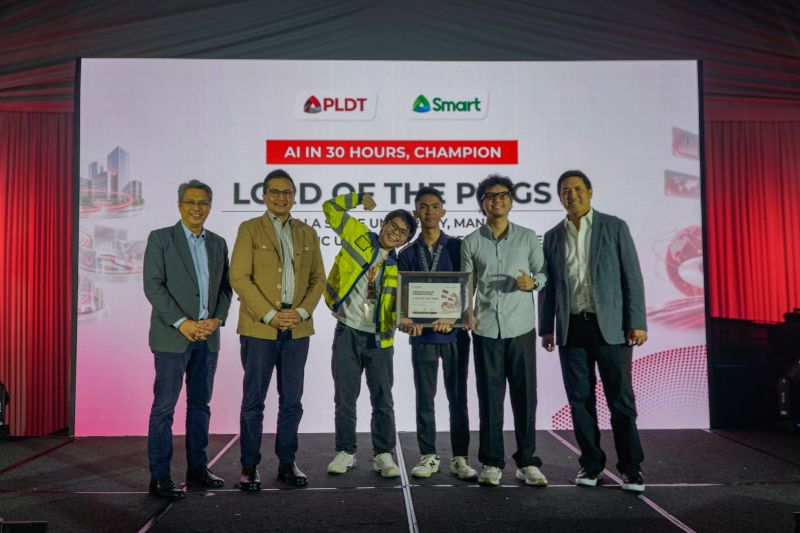
PLDT and Smart's Roby Alampay, Nico Alcoseba, and Blums Pineda (right) with champions Lord of the Pings: Jay Arevalo, James Torzar, James Magpantay
For PLDT Enterprise, the competition reflects the importance of giving aspiring innovators opportunities to apply what they learn, gain practical experience, and collaborate with experts who can help them develop their capabilities.
"There's a big difference between learning about AI and actually sitting down with a team to build something with it. When students are given a real challenge, a deadline, and people who can guide them, they discover what they're capable of. That's what we want to encourage through AI in 30 Hours—the confidence to explore an idea, learn from the process, and keep improving," said Nico Alcoseba, First Vice President and Head of Enterprise Product Management and Innovations at PLDT Enterprise.
The competition was supported by strategic partners De La Salle University and Animo Labs, with contributions by technology partners and industry supporters, including Rokid Philippines, UiPath, 6D Technologies, Genesys, Fortinet, Microsoft, and Huawei Philippines, whose involvement helped connect academic learning with industry innovation.
Beyond the recognition, the experience offered participants an opportunity to develop their technical and collaborative skills, receive feedback, and better understand the process of translating AI concepts into practical applications.
"We knew 30 hours would be challenging, but it pushed us to make decisions, work closely as a team, and find ways to improve our idea along the way. Having mentors and industry experts share their perspectives made the experience even more meaningful. We're grateful for the recognition, but what we'll remember most is how much we learned and what we were able to build together," said James Randall A. Magpantay, representative of Team Lord of the Pings.
Strengthening AI innovation for the public sector
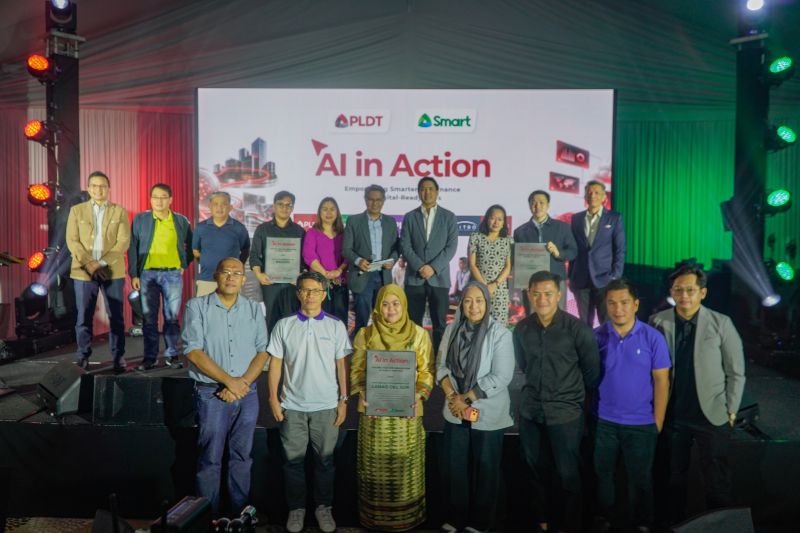
The winning teams were also featured during the AI in Action Forum, held on November 5, 2026, at the Glass Pavilion of Dusit Thani Manila. The forum brought together government leaders, technology experts, industry representatives, and members of the academe to explore how AI can move from experimentation toward practical applications that support better public services.
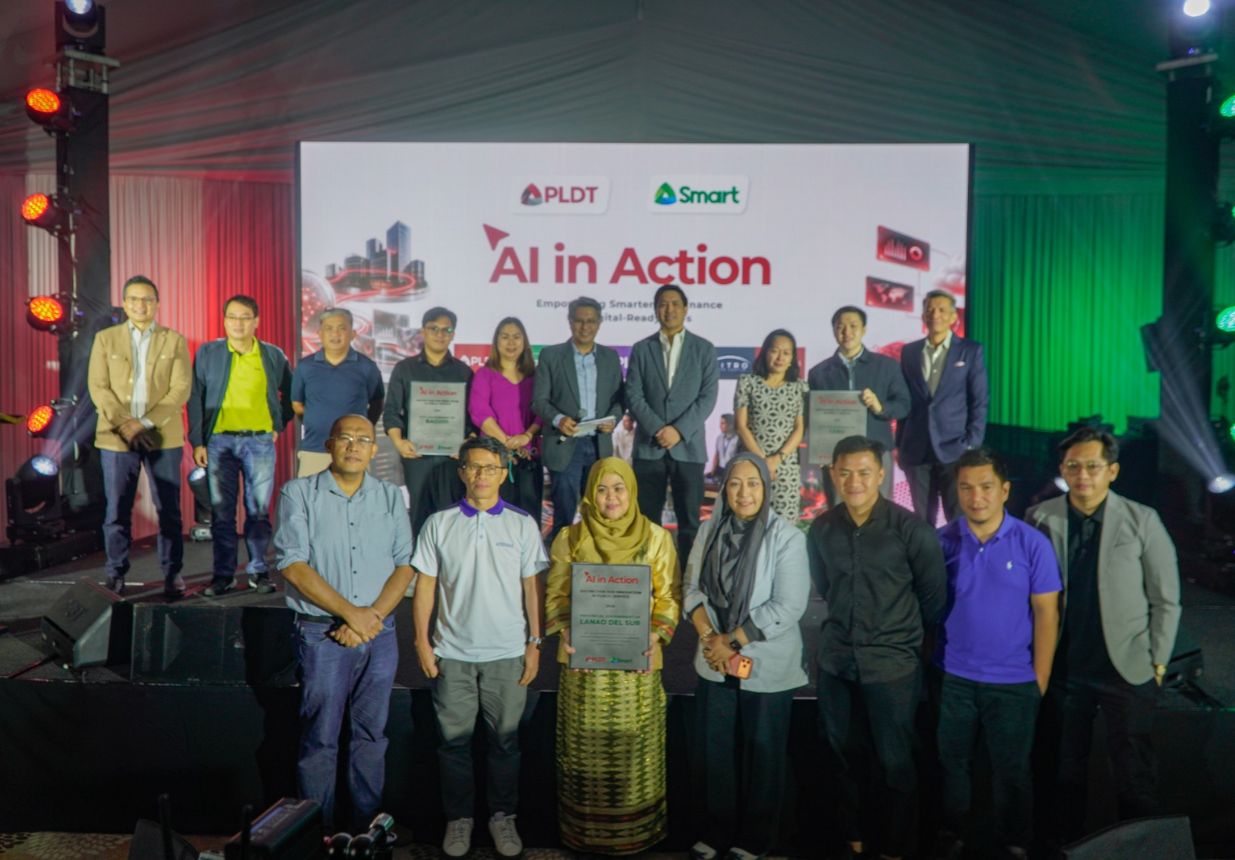
As part of the forum's AI in Action Showcase, the student innovators presented their work alongside AI solutions developed by local government teams from Baguio City, Cabanatuan City, Cebu City, and Lanao del Sur through the PLDT and Smart AI-in-a-Box Mentorship Program.
The LGU projects addressed various public-sector needs, including zoning compliance, citizen feedback and concern management, public service reporting, and infrastructure project monitoring. Together with the student presentations, these initiatives highlighted opportunities for AI to address practical challenges across different communities and sectors.
For PLDT Enterprise, bringing these initiatives together underscores the value of collaboration among government, industry, and educational institutions in helping build the skills and capabilities needed for responsible and meaningful AI adoption.
"When we talk about bringing AI into public service, we always have to remember who it is meant to help—the people in our communities. Seeing students develop new ideas alongside local governments working on their own challenges is encouraging because it shows how much can happen when we connect people with the right knowledge and support. We want to help create more of these opportunities, where innovation can grow into something genuinely useful," said Ruby Montoya, Vice President and Head of PLDT Enterprise Public Sector Revenue Group.
Through initiatives such as AI in 30 Hours, PLDT Enterprise seeks to strengthen collaboration across the technology ecosystem while helping young Filipinos develop the experience, confidence, and skills to participate in the country's digital future.
As AI continues to shape how organizations and communities operate, empowering the next generation to explore its possibilities is an important step toward ensuring that innovation becomes increasingly accessible, practical, and relevant to the needs of Filipinos.