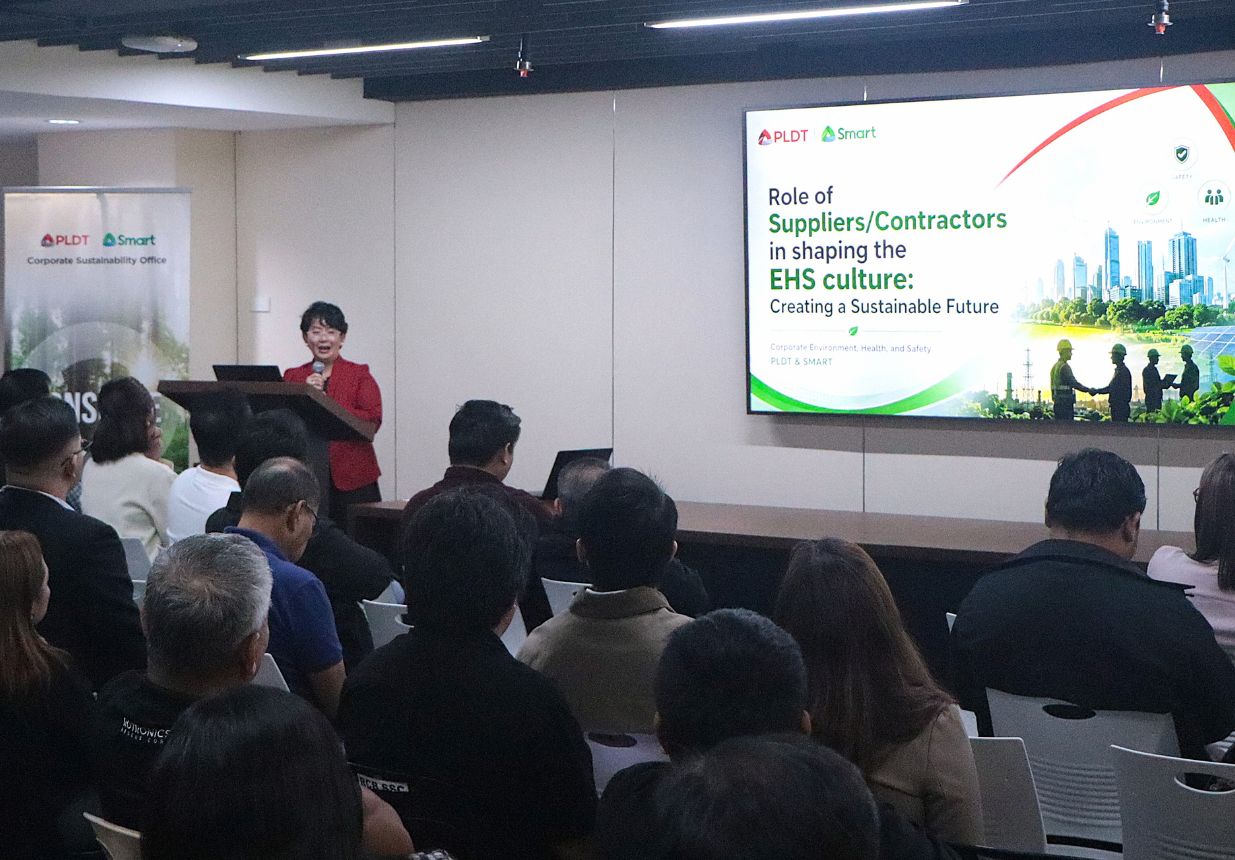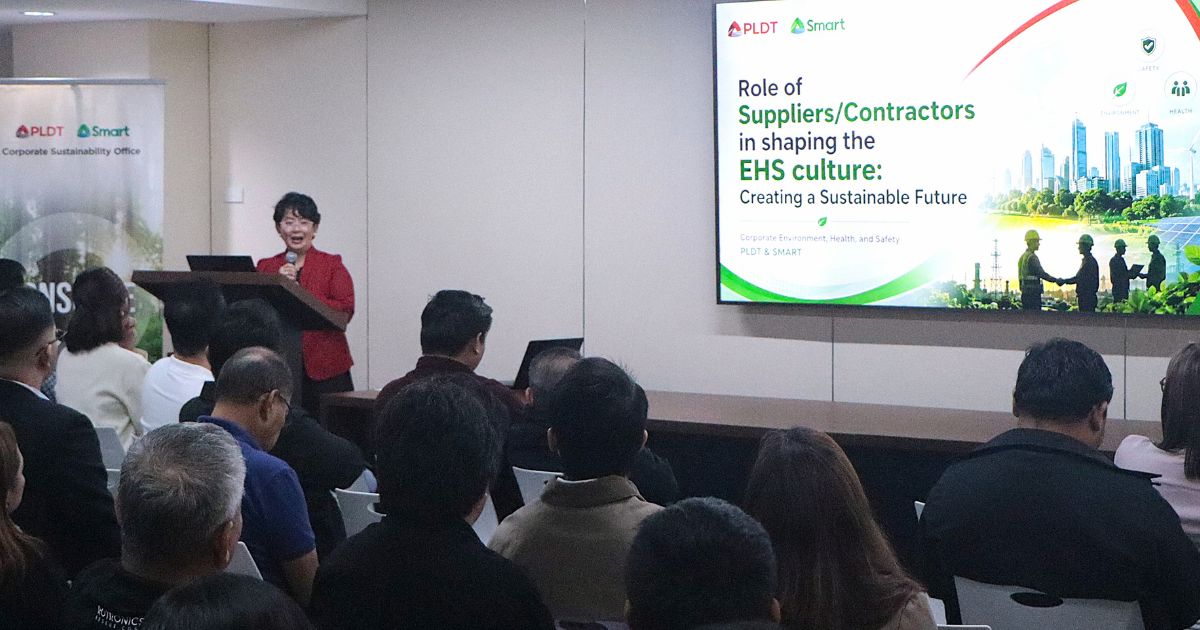
PLDT and Smart are bringing more of their supply chain partners behind a shared commitment to responsible and resilient business - from protecting human rights and workplace safety to strengthening cybersecurity, business continuity and environmental stewardship.
Since stepping up these engagements in 2024, the companies have reached supply chain partners accounting for 79% of the Group’s 2025 procurement spend.
At the forum, PLDT Vice President and Head of Supply Chain Governance and Enablement Bea Masangkay discussed the importance of integrating sustainability in business and in succeeding engagements across the supply chain.
“The challenges we face today, from climate change and resource constraints to evolving regulatory requirements and emerging digital risks, demand collective action. Hence, sustainability is no longer a choice, nor a standalone initiative pursued in isolation. It is a shared responsibility, and the strength of our efforts will ultimately depend on the strength of our partnerships,” said Masangkay.
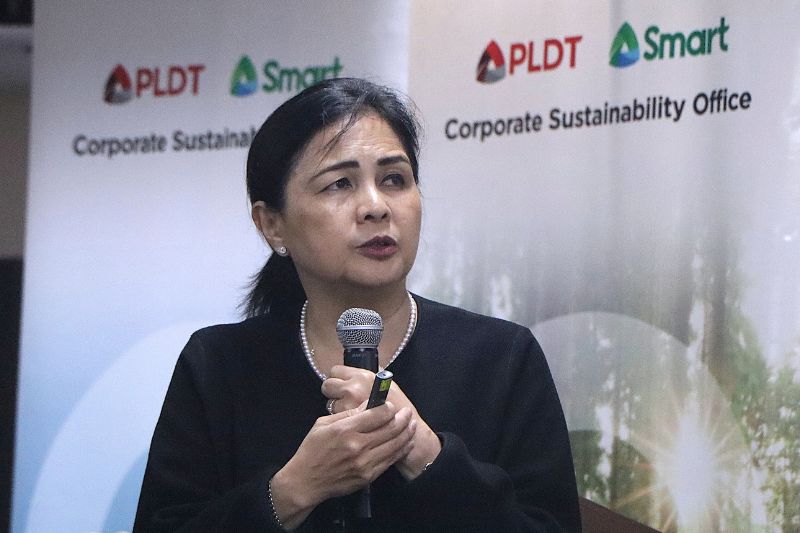
PLDT Chief Sustainability Officer Melissa Vergel de Dios highlights how partnerships continue to play a critical role in advancing ESG performance and creating long-term value throughout the value chain.
Echoing this, Smart Commercial Logistics Head Warren Ermac emphasized the vital role of sustainability in building organizational resilience.
“Sustainability is no longer just an environmental conversation. It is about resilience, governance, cybersecurity, and responsible partnerships. At PLDT and Smart, we have been taking meaningful steps to embed it into our daily operations, from smarter fleet management to utilizing data-driven solutions for ESG performance monitoring. Now, we are also working more closely with partners who share the same commitment to responsible business,” added Ermac.
PLDT and Smart have been increasingly embedding sustainability and ESG considerations into their supplier chain management policies and practices. The Group enforces a Supplier Code of Conduct, which provides guidelines for ethical business practices and sets expectations for suppliers to uphold parallel ESG standards and relevant regulations.
PLDT and Smart further include sustainability into their supplier onboarding, due diligence, qualification, performance monitoring, and continuous engagement processes. In 2025, the Group has screened 100% of its suppliers on environmental and social criteria, as well as communicated its anti-corruption policies to 92% of its active and newly qualified suppliers. Covering the same period, PLDT and Smart also reported zero cases of child labor and forced labor, and zero complaints received on unsafe working conditions across their supply chain, along with zero number of contracts with business partners terminated due to corruption.
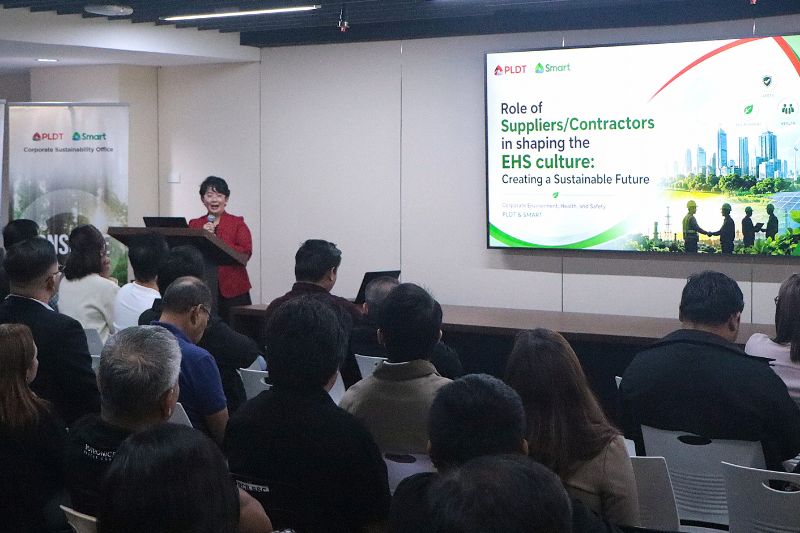
Highlighting the importance of sustained supplier engagement, PLDT and Smart Chief Sustainability Officer Melissa Vergel de Dios underscored how partnerships continue to play a critical role in advancing ESG performance and creating long-term value throughout the value chain.
“As we continue to embed sustainability into our business, we leverage these partnerships to expand the breadth and depth of our efforts which boost our capacity to achieve our ESG goals," said Vergel de Dios.
Parallel to their supply chain engagements, PLDT and Smart are also continuing to include sustainability in their employee onboarding and skilling programs. The Group has also been enhancing procurement practices and capacitating internal buyers to strengthen alignment with ESG focus areas and commitments.
PLDT and Smart’s supplier ESG program supports their continuing commitment to the United Nations (UN) Global Compact and contribution to the UN SDGs, particularly SDG 9 (Industry, Innovation and Infrastructure), SDG 12 (Responsible Consumption and Production), and SDG 17 (Partnerships for the Goals).